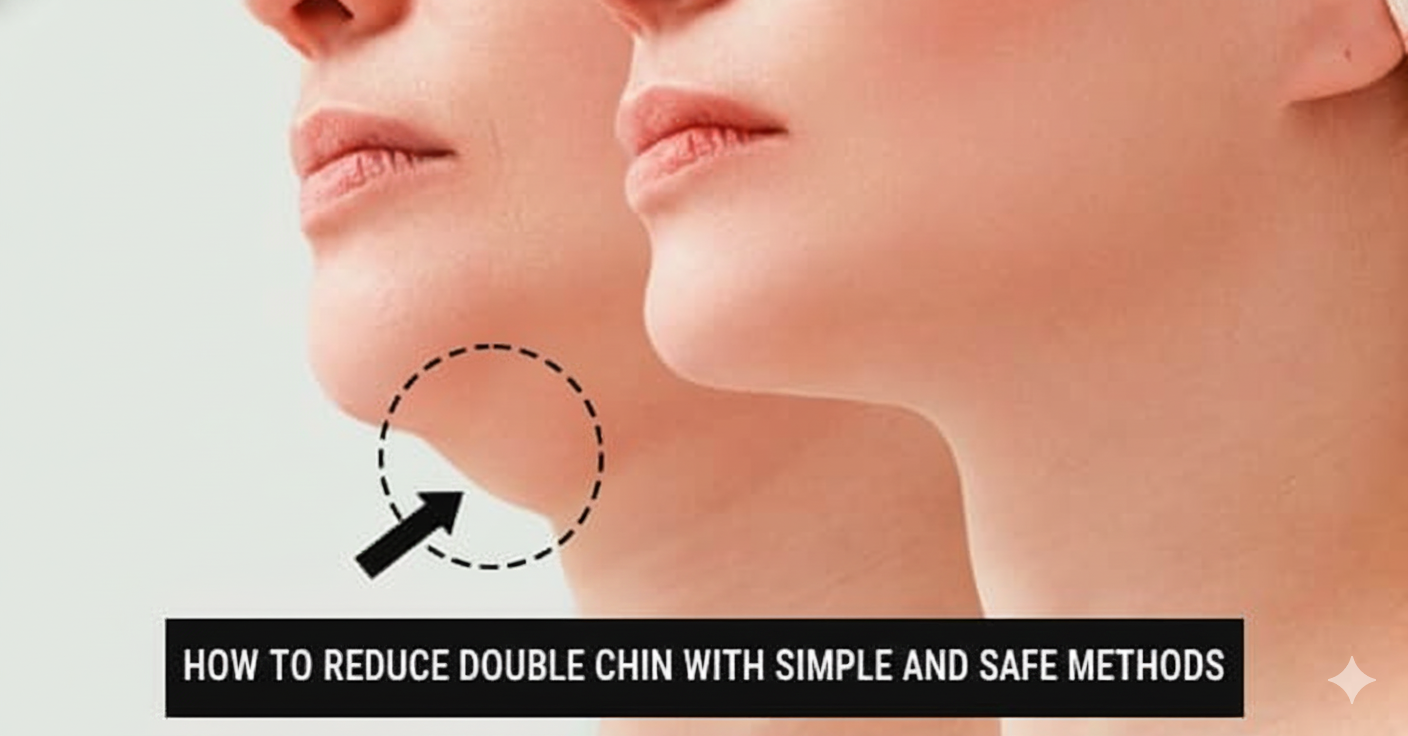
HOW TO REDUCE DOUBLE CHIN WITH SIMPLE AND SAFE METHODS
Introduction
The appearance of a double chin can affect facial profile and self confidence, even in individuals who maintain a healthy body weight. This concern is usually the result of a combination of factors such as genetics, localised fat, skin laxity and posture related muscle weakness.
The good news is that a structured plan combining lifestyle modification, targeted exercises, skin care and professional guidance can gradually reduce the prominence of a double chin in a safe and sustainable manner.
Understanding the Causes
- Localised fat accumulation: The submental area is a common site for fat deposits, which can create fullness under the chin.
- Age related changes: Over time, collagen and elastin levels decline, leading to looser skin and reduced support.
- Genetic predisposition: Facial structure and fat distribution patterns often run in families.
- Poor posture: Constantly looking down, especially at digital devices, may weaken neck and jaw muscles over time.
Home Based Measures
The following steps can be integrated into a daily routine:
- Structured facial exercises: Chin lifts, slow neck rotations and controlled jaw movements can help strengthen the underlying muscles.
- Posture correction: Maintaining an aligned neck and spine while working, reading or using a phone supports a more defined jawline.
- Balanced nutrition and weight management: A healthy diet and regular physical activity reduce overall fat stores, including under the chin.
- Targeted skin care: Firming creams and regular massage with upward strokes can support circulation and skin tone.
Professional Options
When home care alone is insufficient, non invasive or minimally invasive treatments may be considered in consultation with an aesthetic physician. These can include energy based skin tightening, injectable fat reduction or thread based lifting, depending on individual assessment.
A thorough consultation is essential to determine the safest and most appropriate plan, taking into account anatomy, expectations and medical history.