Hydrafacial vs Chemical Peel: Which Is Better for Indian Skin?
Introduction
Indian skin is rich in melanin and often exposed to high levels of heat, humidity and environmental stress. As a result, concerns such as tanning, uneven tone, post acne marks and dullness are very common.
Among advanced facial treatments, Hydrafacial and Chemical Peels are widely recommended. Each modality works in a different way and offers specific advantages. Selecting the correct option requires an understanding of skin type, concern and downtime tolerance.
Hydrafacial: Gentle, Multi Step Rejuvenation
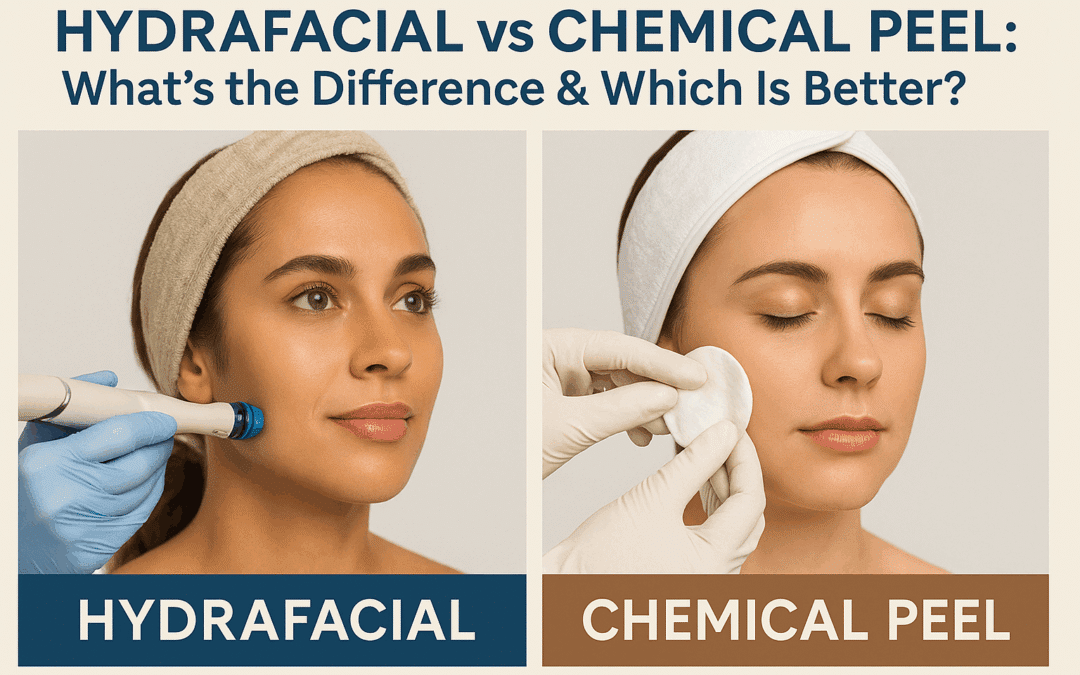
Hydrafacial is a non invasive procedure that combines cleansing, controlled exfoliation, painless extraction and infusion of hydrating serums in a single session. Vortex based technology helps remove impurities while delivering antioxidants and moisture binding ingredients.
- Suitable for most skin types, including sensitive and redness prone skin.
- Provides immediate brightness and smoother texture with virtually no downtime.
- Particularly helpful before events when instant radiance is desired.
Chemical Peels: Targeted Skin Renewal
Chemical peels use carefully selected acids at defined concentrations to exfoliate the upper layers of the skin in a controlled manner. Depending on the formulation, peels can help address tanning, pigment spots, early lines and surface irregularities.
- Results are seen gradually over several days as old cells shed.
- Different strengths and acid combinations can be chosen for specific concerns.
- Downtime can range from minimal to several days of visible peeling, depending on depth.
Considerations for Indian Skin
- Pigment sensitivity: Indian skin can develop post inflammatory pigmentation if procedures are too aggressive. Therefore, peel strength and contact time must be customised by an experienced dermatologist.
- Safety profile: Hydrafacial is generally considered very safe when performed correctly, because it maintains the barrier while gently resurfacing.
- Desired outcome: For a quick, refreshed appearance with minimal risk, Hydrafacial is often preferred, whereas chemical peels may be selected for more prominent pigmentation or textural concerns.
Which Treatment to Choose?
For individuals seeking an instant glow, improved hydration and deep cleansing with negligible downtime, Hydrafacial is usually an excellent starting point. For stubborn tanning, acne marks or deeper unevenness, a series of mild to medium depth chemical peels under medical supervision may be more effective.
In many cases, clinics design combination protocols that alternate Hydrafacial sessions with carefully spaced peels, thereby supporting both barrier health and progressive correction.
Professional Consultation
Because each person has a unique skin history and lifestyle, a formal consultation with a qualified dermatologist or aesthetic physician is strongly recommended before beginning any advanced treatment. A personalised plan helps maximise benefits while minimising the risk of irritation or pigmentation changes.